
PROWILLAP
 |
Methodology to translate and demonstrate the biocomplexity of eco-social systems: Willapa Bay as a case study |
|
Research
Context and Issues
Understanding the complexity of eco-social systems requires an approach that questions the conventional way in which we see Nature, human societies and their interactions. Appropriate examples and adequate methodologies are needed to better change those attitudes.
Objectives
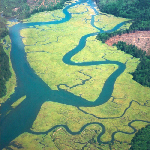
This project aims to demonstrate the value of a transdisciplinary methodology to understand the evolution over two centuries of a US coastal system (Willapa Bay) with a high initial biodiversity.
Methodology
- Construction of the Willapa Bay eco-social system to highlight the main phases of the evolution of all living species according to pressures and/or climatic constraints over a long time-frame. The main changes in biodiversity at multiple scales are described, as are main drivers and environmental, economic, social and political pressures that led this system to evolve.
- Diachronic reconstitution of Willapa Bay over two centuries using a panarchical representation of social, economic and political events that have governed or modified the biodiversity as provider of goods and services. This part aims to analyse the complex mechanisms that led the biodiversity to change and to identify the elements (milestones) that most impact the resilience of this system, still evolving today. In particular, we highlight where and when pressures and their related consequences have modified meta-stable balances of the system and threats to biodiversity.
Results and perspectives
OngoingPublications issued from the project
FONTENELLE, G. (2013) .Methodologie pour traduire et demontrer la biocomplexite d?eco-sociosystemes : application a l?evolution de la biodiversite de la baie Willapa (,WA, USA)
FONTENELLE, G. (2011) .Surprises et fuites en avant... ou comment la resilience d'un ecosysteme cottier (Willapa bay,WA, USA) a du repondre sur 150 ans aux multiples pressions des usagers
People involved
 |
Haury Jacques, Scientist |
Partners
Funding and Support
French Foundation for Research on Biodiversity