
AMOBIO II
 |
Multiscale, multi-pressure and multi-criteria analysis of the effects of anthropic land use on the biological communities of French rivers |
|
Research
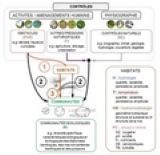
The AMOBIO I 2021–2024 program (Dézerald et al. 2025) has resulted in a unique data repository in France, and likely in Europe. It provides rich information on freshwater biological compartments and the natural and anthropogenic contexts to which they respond (i.e., approximately 20 years of data from thousands of monitored stations in mainland France, and tens of thousands of corresponding operations, for approximately 2,329 taxa). This work required a lengthy and painstaking process of compiling diverse data sources, advanced computer and statistical processing, and complex visualization of this information. The metrics developed through
the AMOBIO I program are well-suited to typological and cartographic analyses of the multi-pressure gradients exerted within the watercourses of mainland France, and could thus provide essential information for the preservation and sound management of these watercourses. This data allows us, for the first time, to approximate the magnitude of the cocktail of pressures to which aquatic environments are subjected, through human development, land use, and activities; a cocktail itself embedded in a diverse natural context further complicated by the large-scale complexity of dendritic drainage networks. Another interesting perspective would be to explore the functional responses of organisms. It would then be possible, for example, to hypothesize an enhanced response from organisms based on their dispersal capabilities within the drainage network, regardless of the species or group of species studied (diatoms, macroinvertebrates, and/or fish). The variation in species traits along certain dimensions of the pressure exerted by flow barriers (such as the distance to the first barrier) could, for example, provide new insights into the impact of human activities and developments on the functional composition of communities. In this sense, and therefore in line with the AMOBIO I program, with regard to nested multi-pressure, multi-spatial and multi-temporal scale approaches, the AMOBIO II 2025–2028 program will aim to:
(i) to move beyond species richness alone and strengthen trend analysis by examining bioecological traits and associated functional responses of aquatic organisms, as presented in the Phase 1 report (Dézerald et al. 2025), while in Phase 2 opening a new area of study on the same concomitant effects of several pressures generated by human occupation and land use. The focus here will therefore be on interpreting variations in trait profiles and syndromes, measured at the biological community level. Statistical analyses will remain centered around Random Forest (Machine Learning) and will be complemented by univariate and multivariate approaches to meet the objectives of the AMOBIO II program.
(ii) to ensure the proper updating capacity of the sources and databases used within the AMOBIO program, in particular by optimizing the data structure and compilation and the scripts of analyses. This cleaning step will allow for the integration or updating of essential databases, selected based on the gaps identified in AMOBIO I, including, at a minimum and if available, the supplementary stream temperature data and those from the Pressures and Risks of Hydromorphological Impacts – PRHYMO platform (Grosprêtre and Kreutzenberger 2024). The integration of macrophytes into the studied communities is being considered but not yet finalized, as it depends on the availability and feasibility of integrating this data into the AMOBIO program;
(iii) to increase dissemination of the results, by aiming for this purpose for a substantial work of publications in peer-reviewed journals, while simultaneously deploying a capacity to offer scientific guidance notes as well as syntheses.
The ultimate beneficiaries are the Ministry for Ecological Transition, the French Office for Biodiversity, the water agencies, the regional directorates for the environment, planning and housing, as well as all other institutional and non-institutional and/or local stakeholders (e.g., natural parks, technical units of decentralized services).
People involved

 |
DÉZERALD Olivier, Scientist Phone : +33 2 23 48 54 46 Email : olivier.dezerald@inrae.fr |
 |
LASNE Emilien, Scientist Phone : + 33 2 23 48 54 44 Email : emilien.lasne@inrae.fr |
 |
LASSALLE Gilles, Scientist Phone : +33 2 23 48 56 61 Email : gilles.lassalle@inrae.fr |
 |
ROUSSEL Jean-Marc, Scientist Phone : +33 2 23 48 57 75 Email : jean-marc.roussel@inrae.fr |
Funding and Support
Office Français de la Biodiversité